
Commercial Earth observation (EO) is now embedded in daily defense and intelligence operations, not as a novelty, but as a foundational input to mission planning and decision-making. By nearly every surface metric, access to space-based imagery has never been greater.
- Global coverage is broader.
- Revisit rates are faster.
- Tasking interfaces are easier to use than ever.
And yet, for Intelligence, Surveillance and Reconnaissance (ISR) teams, consistent outcomes remain frustratingly elusive.
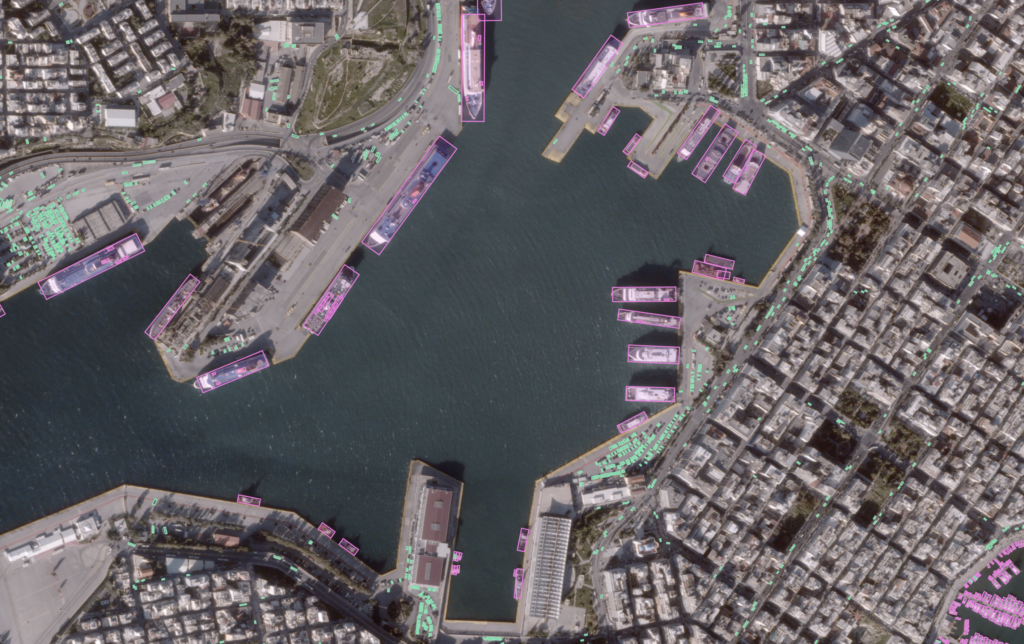
Imagery still fails to arrive when it is needed most. Collections are missed, delayed or delivered in a form that cannot support the mission at hand. When that happens, the failure is rarely visible outside the operations floor. What appears to leadership as “adequate access” often feels, at the working level, like uncertainty that must be constantly managed.
This gap between access and outcomes is now one of the defining challenges of modern ISR.
When GEOINT doesn’t “show up”
In practice, saying “the imagery didn’t show up” describes several distinct failure modes that all lead to the same result: a missed or degraded intelligence outcome.
Sometimes the collection opportunity itself is missed due to geometry, weather or competing tasking priorities. In other cases, imagery is collected but not delivered within the mission-defined time window. There are also situations where imagery arrives on time but is unusable for the task due to cloud cover, off-nadir angles or insufficient quality. Increasingly, imagery is delivered as expected but becomes operationally irrelevant due to downstream latency in processing, analytics or dissemination.
Each of these scenarios has different causes, but the operational impact is the same.
- Analysts stall.
- Planners improvise.
- Decision-makers receive assessments prefaced with caveats instead of delivered with confidence.
The hidden operational cost of uncertainty
When outcomes cannot be relied upon, workflows adapt accordingly.
ISR teams begin planning around contingencies instead of confidence:
- Tasking timelines are padded.
- Multiple providers are tasked with the same area of interest.
- Analysts maintain parallel workflows using older imagery or alternative sources, just in case.
None of this shows up as a tasking failure on paper. But the cost is real. Time is wasted. Attention is divided. The value of speed and precision erodes quietly, one compromised decision at a time.
Hedge-tasking as a survival strategy
From the outside, redundant tasking can appear inefficient. From the inside, it is a rational response to an unpredictable system.
When teams cannot depend on a single task delivering the required outcome, they hedge. They task multiple commercial providers, satellites and/or collection windows. This behavior is not driven by excess budget or poor discipline; it’s driven by mission risk.
The result, however, is cost inflation that rarely maps cleanly to improved outcomes. In some cases, the operational cost per answered intelligence question increases significantly, even if access metrics appear healthy.
This dynamic reinforces itself: the more uncertainty persists, the more hedge-tasking becomes standard practice.
The transparency gap
One of the leading contributors to the problem is transparency.
In best-effort, access-based tasking models, missed or delayed collections are often reported without a meaningful explanation as to why. Was it the weather? Was it a priority conflict? Was it orbital geometry or a downstream processing issue?
Without clarity, teams cannot learn or adapt. Planning does not improve. Tasking strategies do not mature, and the same inefficiencies persist.
Transparency is about enabling better decisions. When teams understand why outcomes fail, they can plan smarter, allocate providers more effectively and reduce unnecessary redundancy over time.

Access alone is no longer the problem
There’s no shortage of access to EO imagery these days. But access without predictability, accountability and transparency does not meet the demands of modern ISR.
The operational effectiveness of GEOINT is not defined by whether a satellite was available or a task was submitted. Effectiveness is intelligence delivered within a mission-defined window, at a usable quality, to enable confident decision-making.
As missions become more time-sensitive and analytics-driven, the cost of uncertainty continues to rise. Teams can no longer afford to treat reliability as something they self-manage through redundancy and workarounds.
This is why the conversation is shifting beyond access.
For a deeper examination of how best-effort tasking models evolved and what a commitment-based approach to intelligence delivery looks like in practice, download the white paper, From access to assurance: Introducing certainty into commercial Earth observation subscriptions. In it, we outline the structural limits of access-first models and introduce a framework for moving from access to guaranteed outcomes.